
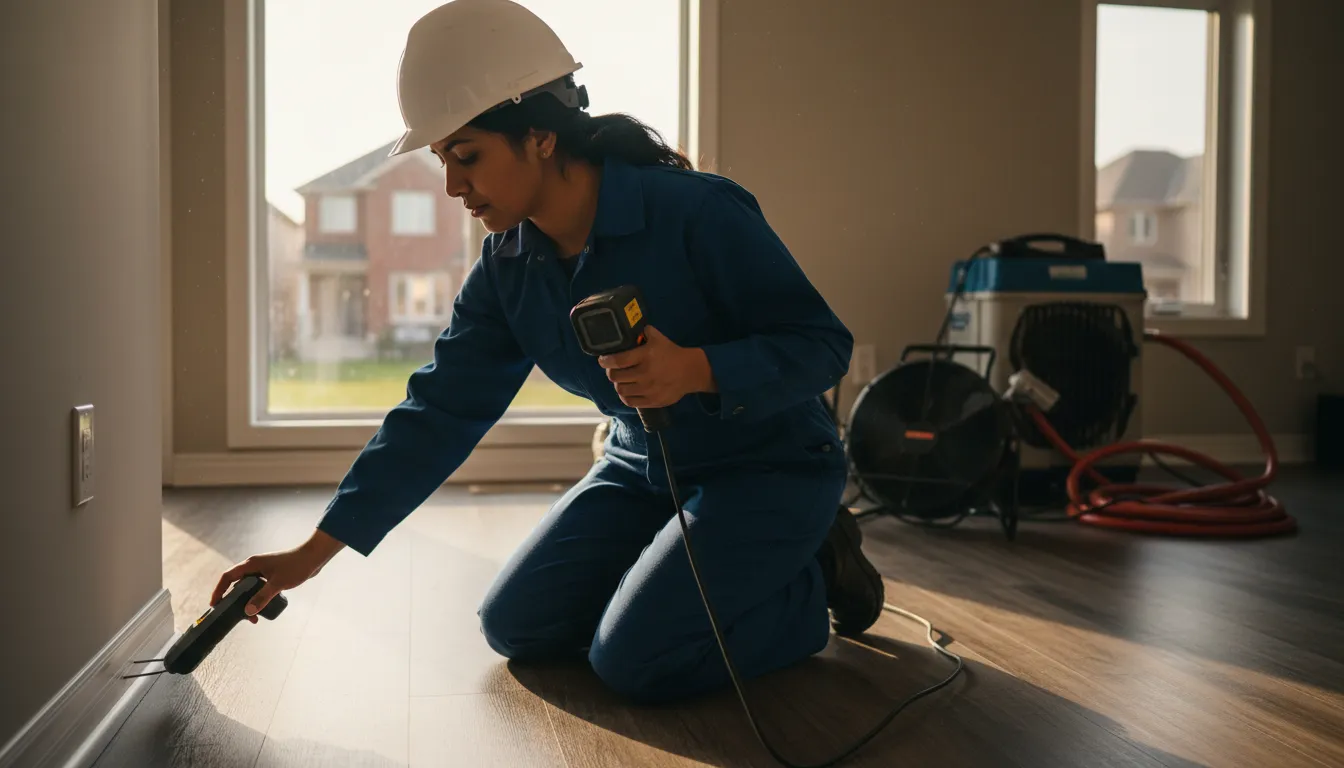
Flood cleanup in Toronto that starts with a scope, not a guess
Whether it's a flooded basement after spring melt or a burst supply line on the main floor, we clean up with moisture mapping and a written plan — not a flat 'per square foot' number pulled out of the air.
Free estimates · Same-day service available · No obligation
Flood cleanup looks different in a Scarborough bungalow than in a Liberty Village condo
Cleanup isn't a single checklist. A finished basement rec room with drywall and carpet needs a different approach than an unfinished storage basement, and both differ again from a main-floor flood in a condo with engineered hardwood.
Finished basements need material assessment
Drywall, baseboards, and carpet that have absorbed water often need to come out — but only the sections that tested wet, not the whole room by default.
Unfinished basements dry faster but still need attention
Concrete and exposed framing dry more quickly, but standing water in an unfinished basement still needs full extraction and a check for what soaked into stored belongings.
Condo and main-floor floods risk downward damage
Water on a main floor or in a condo unit can travel to the unit below, so cleanup often includes checking adjacent units or ceilings, not just the room where water appeared.
Toronto's older sewer infrastructure adds a wrinkle
In parts of the older 416 core, combined sewer systems can back up during heavy rain, meaning a 'flood' may carry contamination that changes the cleanup protocol entirely.
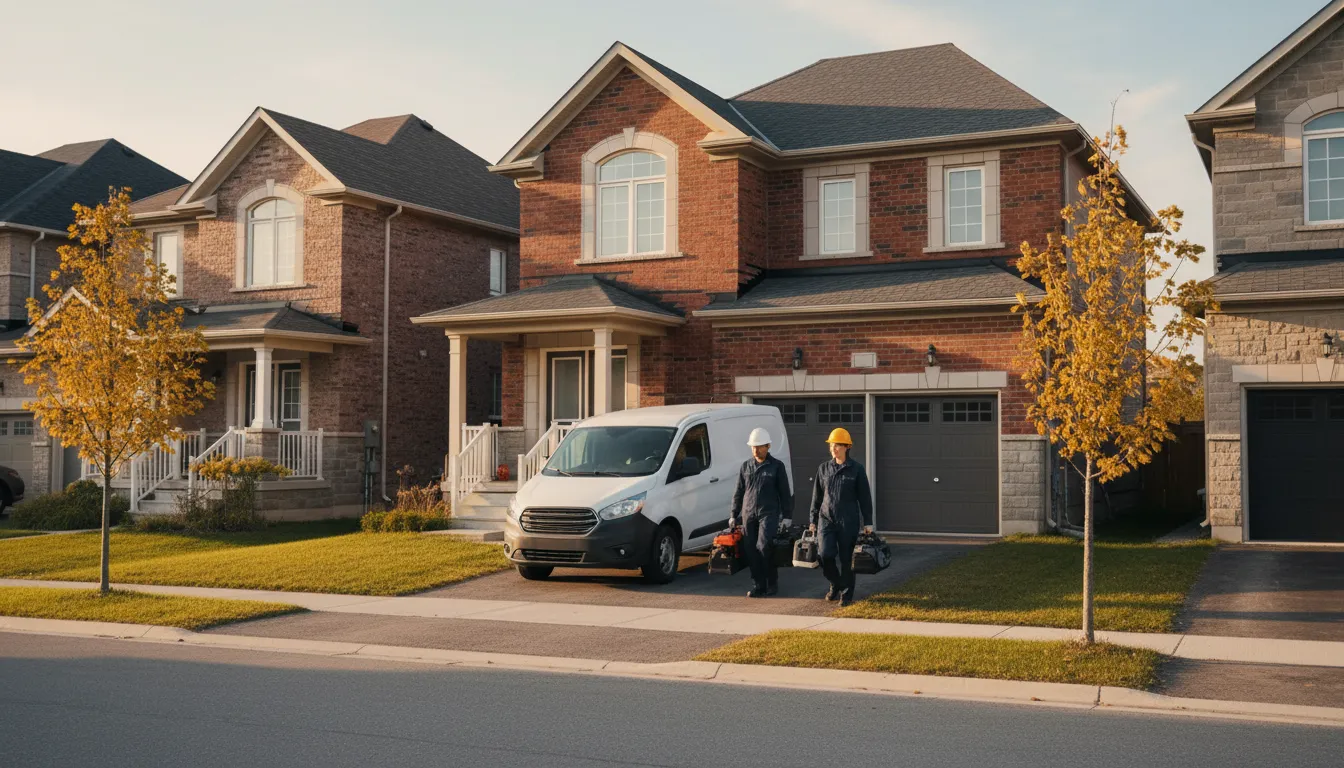
The flat-rate flood cleanup quote
A lot of quotes for flood cleanup are priced 'per square foot flooded' without anyone checking what's actually saturated. That means you might pay to remove baseboards that never got wet, or — worse — pay a low flat rate that quietly excludes the wall cavity drying you actually need.
Scope first, invoice second
We test moisture levels in flooring, baseboards, and lower drywall before deciding what needs to be removed. If a section reads dry, it stays. If it's saturated, we show you the reading and explain why it's coming out. You get an itemized scope, not a flat number designed to make comparison shopping harder.
Our flood cleanup process
From first contact to a dry, sanitized space.
- 1
1. Initial assessment
We review what flooded, the water source, and how long the area has been wet.
- 2
2. Moisture mapping
A meter reading room by room tells us exactly what's saturated and what isn't.
- 3
3. Debris and damaged material removal
Only materials that test wet are removed — with reasoning explained, not just billed.
- 4
4. Cleaning and sanitizing
Affected surfaces are cleaned and treated to prevent secondary issues like mould.
- 5
5. Drying handoff
We outline the structural drying plan and equipment needed to finish the job.
Why homeowners choose us for flood cleanup
We treat cleanup as a diagnostic process, not a demolition default.
Moisture-tested removal decisions
We only remove materials that test wet — not everything within reach.
Fast scheduling
Flood cleanup delays increase mould risk, so we move quickly once scoped.
Sanitizing included where needed
Cleaning and treatment are scoped based on the water type involved.
GTA housing stock familiarity
From finished basements to unfinished storage spaces, we scope accordingly.
Written, itemized quotes
You see what's being removed and why before we start.
Insurance-friendly documentation
Photos and readings are organized for straightforward claim submission.
Flood cleanup questions
Do you remove all flooring after a flood?
Only flooring that tests wet with a moisture meter. If a section of subfloor or carpet reads dry, we don't remove it just because it's in the flooded room.
How long does flood cleanup take?
Cleanup itself — extraction, debris removal, sanitizing — often takes a day or two. Structural drying afterward can take several more days depending on how saturated materials are.
Is flood cleanup different from sewage cleanup?
Yes. Clean water flooding and sewage backup require different containment and sanitizing protocols. We'll tell you which category your situation falls into.
Can you clean up a flood in a finished basement?
Yes — finished basements are common across the GTA, and we scope drywall, flooring, and baseboards individually rather than assuming a full teardown.
What happens to belongings that got wet?
We'll assess what's salvageable versus what should be discarded, and explain our reasoning rather than making a blanket call.
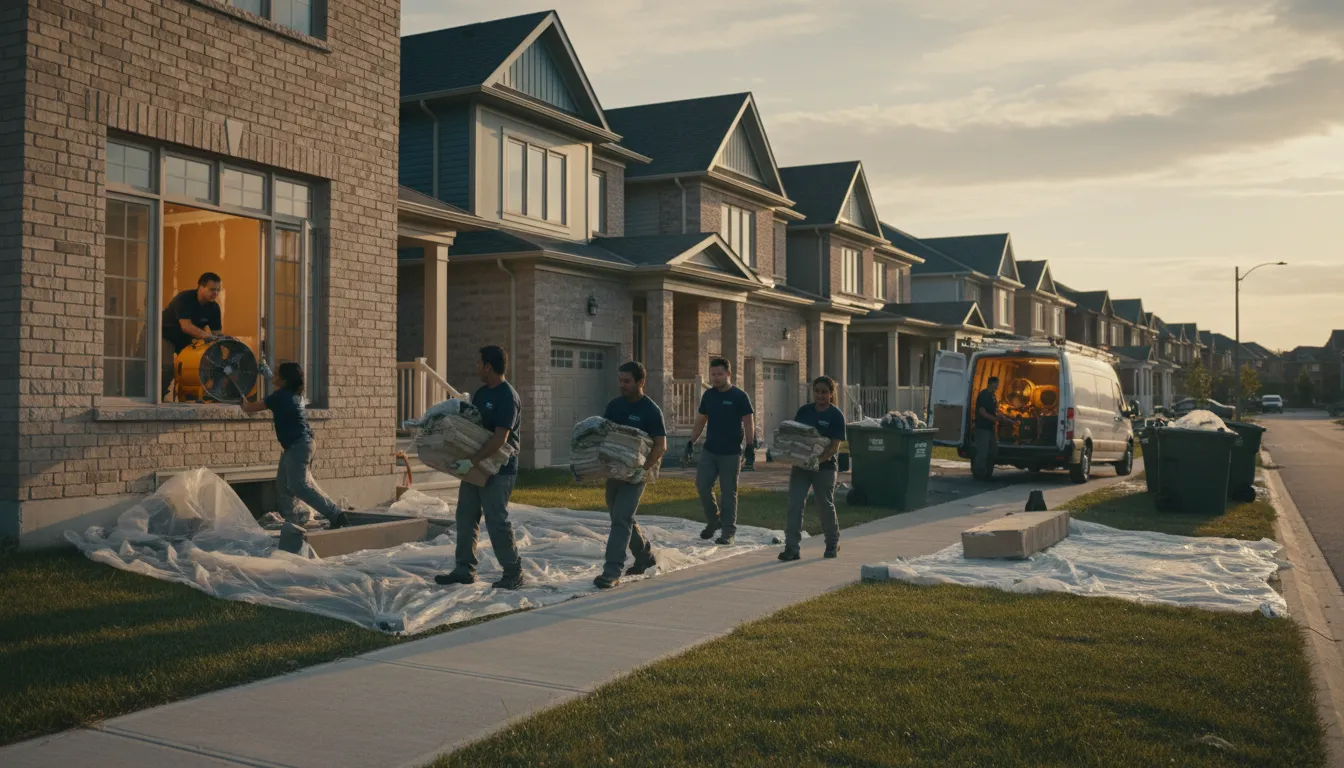
Get a flood cleanup scope you can verify
Email us the details and photos if you have them, and we'll respond with an honest assessment.
Email Us for a Free EstimateWeather drives water-damage risk — email us if you find water.
Fall water-damage conditions in Toronto, ON
Fall rain around Toronto, ON tests gutters, sump pumps, and foundations; catching leaks and seepage early prevents the slow water damage and mold that surface over winter.
Proudly Serving Toronto, ON
Local, on-time service throughout Toronto and the surrounding area.