

Storm damage restoration for Toronto homes, after the rain stops and the real assessment starts
Wind-driven rain, roof leaks, and overland flooding from GTA storms each damage a home differently. We scope each cause separately instead of quoting one flat 'storm damage' number.
Free estimates · Same-day service available · No obligation
GTA storms damage homes in more than one way
Summer thunderstorms and fall wind events hit the region differently depending on housing age, roofline, and grading — and the restoration needed reflects that.
Wind-driven rain finds gaps in older rooflines
Older roofs and flashing details in established Toronto neighbourhoods can let wind-driven rain in through points that a straight-down rain never reaches.
Intense summer downpours overwhelm grading
Short, heavy summer storms across the GTA can outpace what older lot grading was designed to shed, pushing water toward foundations rather than away.
New-build subdivisions rely heavily on grading and swales
Newer developments depend on engineered grading and swales to manage storm water — when that system is disrupted by landscaping changes, water finds the foundation instead.
Ice and snow-load events cause delayed damage
Damage from a winter storm sometimes doesn't show up as interior water until a thaw, making the timeline between cause and visible damage longer than homeowners expect.

The 'storm damage' quote that skips the cause
A common shortcut: dry the affected area, patch what's visible, and never identify whether the water came from a roof leak, a grading issue, or overland flooding. Skip that step and the same damage can recur in the next storm.
We identify the cause, not just the symptom
Before drying begins, we assess where the water actually entered — roofline, window, grading, or foundation — and note it in your scope. If the cause is outside our restoration work (like a roof repair or grading fix), we tell you plainly so you can address it, instead of drying the same spot again after the next storm.
Our storm damage restoration process
Restoration that accounts for cause, not just cleanup.
- 1
1. Damage assessment
We inspect affected areas and identify the likely entry point for the water.
- 2
2. Moisture mapping
Readings are taken across affected materials to understand how far the water travelled.
- 3
3. Extraction and material assessment
Standing water is removed and damaged materials are evaluated individually.
- 4
4. Structural drying
Affected framing, subfloor, and drywall are dried and monitored until readings confirm completion.
- 5
5. Cause notes for follow-up
We document the likely entry point so you know what to address to prevent a repeat.
Why choose us after a storm
We restore the damage and tell you what caused it.
Cause identification
We note where water likely entered, not just where it ended up.
Fast post-storm response
Storms often cause simultaneous requests across the GTA, so we prioritize based on severity.
Material-by-material assessment
We evaluate individual materials rather than assuming a full teardown.
Written scope and pricing
You see the plan before restoration work begins.
Insurance-ready documentation
Photos and cause notes are organized for adjuster review.
GTA storm pattern familiarity
We've seen how wind-driven rain, grading issues, and overland flooding each present differently.
Storm damage restoration questions
How do I know if storm damage is from my roof or from grading?
The pattern of moisture often tells the story — water at ceiling level usually points to roof or window entry, while water at floor or foundation level often points to grading or overland flooding. We assess this as part of our scope.
Does storm damage restoration include roof repair?
No, our scope covers water damage restoration — extraction, drying, and material assessment. We'll identify if a roof or grading issue needs a separate repair, but that work is outside our scope.
How fast do you respond after a major GTA storm?
Major storms often generate a surge of requests across the region. We prioritize based on severity and respond as quickly as our schedule allows — email us and we'll give you a realistic timeline.
Can storm damage cause problems that show up weeks later?
Yes. Moisture that gets into wall cavities or subfloor during a storm can take time to show visible signs like discoloration or a musty smell, which is why documenting moisture readings at the time matters.
Do you handle overland flooding from heavy rain?
Yes, overland flooding is one of the storm-related causes we regularly restore for GTA homes.
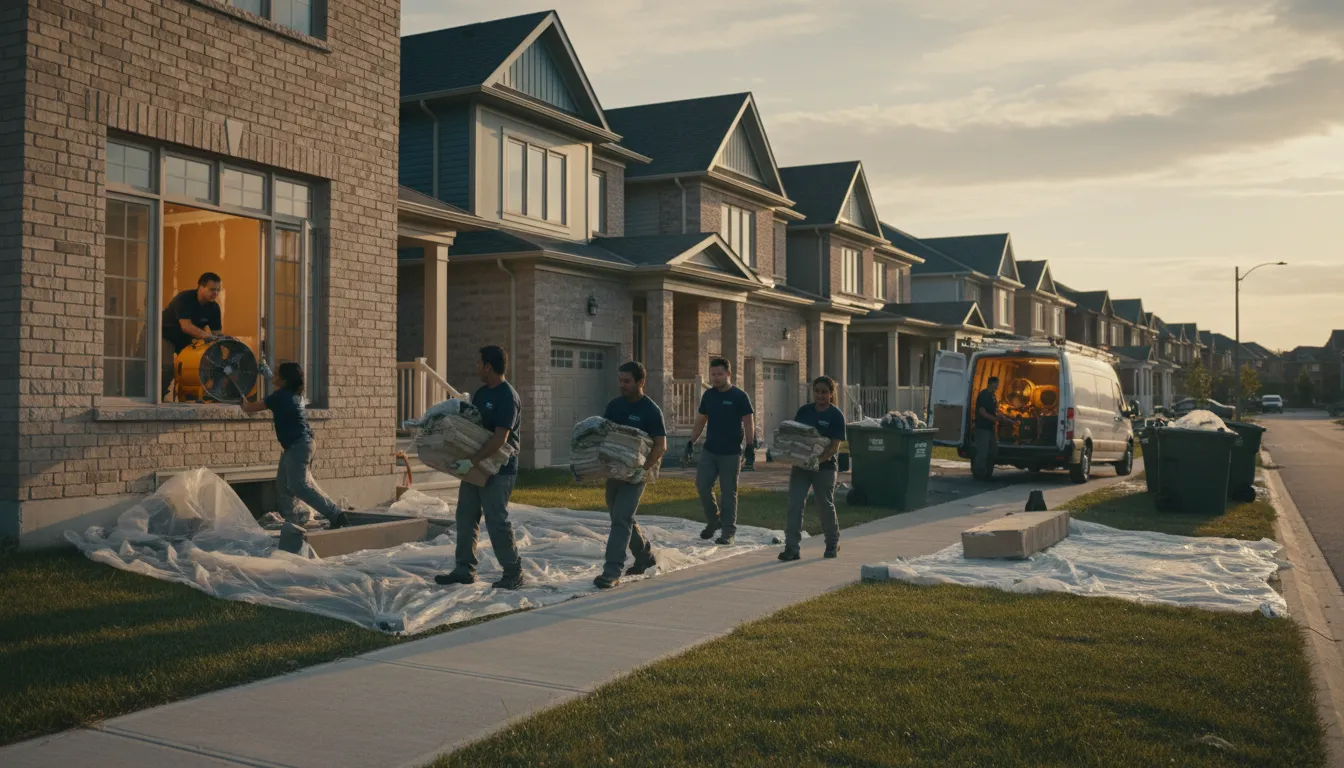
Get storm damage restored, and the cause identified
Email us details and photos of the damage, and we'll respond with an honest assessment.
Email Us for a Free EstimateWeather drives water-damage risk — email us if you find water.
Fall water-damage conditions in Toronto, ON
Fall rain around Toronto, ON tests gutters, sump pumps, and foundations; catching leaks and seepage early prevents the slow water damage and mold that surface over winter.
Proudly Serving Toronto, ON
Local, on-time service throughout Toronto and the surrounding area.