

Sewage cleanup in Toronto, handled as the contamination job it actually is
A sewage backup isn't a bigger version of a clean-water flood — it's a different category of contamination with different containment, disposal, and sanitizing steps. We scope it as such.
Free estimates · Same-day service available · No obligation
Why sewage backups are common in older parts of Toronto
Sewage backup isn't random bad luck for a lot of GTA homeowners — it's tied to infrastructure that predates modern storm capacity.
Combined sewer systems in older neighbourhoods
Parts of the older 416 core still run combined storm and sanitary sewers, which can back up into basements during heavy rainfall when the system is overwhelmed.
Aging sewer laterals
The pipe connecting a home to the municipal main can crack, root-infiltrate, or collapse with age, leading to slow or sudden backups regardless of weather.
Backwater valve absence in older builds
Many pre-1980s Toronto homes were never fitted with a backwater valve, which means municipal sewer surges have a direct path into the basement floor drain.
Summer storm intensity increasing pressure on the system
Intense short-duration summer storms across the GTA can overwhelm municipal capacity faster than older, less intense rain patterns used to.
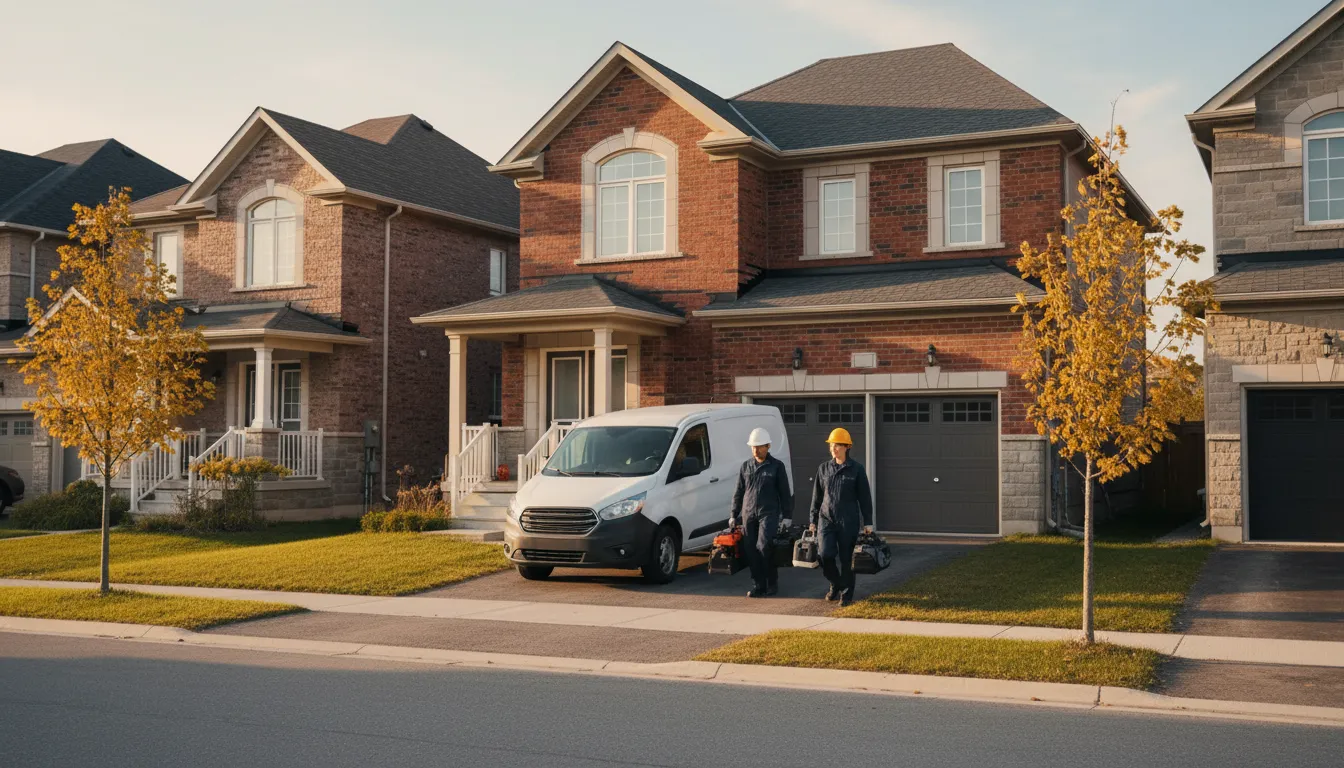
Treating sewage like a regular flood to save money
Some cheap quotes treat sewage backup the same as clean water — pull out the wet stuff, run some fans, done. That skips the sanitizing and disposal protocols that category 3 water actually requires, which can leave contamination behind even after everything looks and smells fine.
Contamination-appropriate scoping from the start
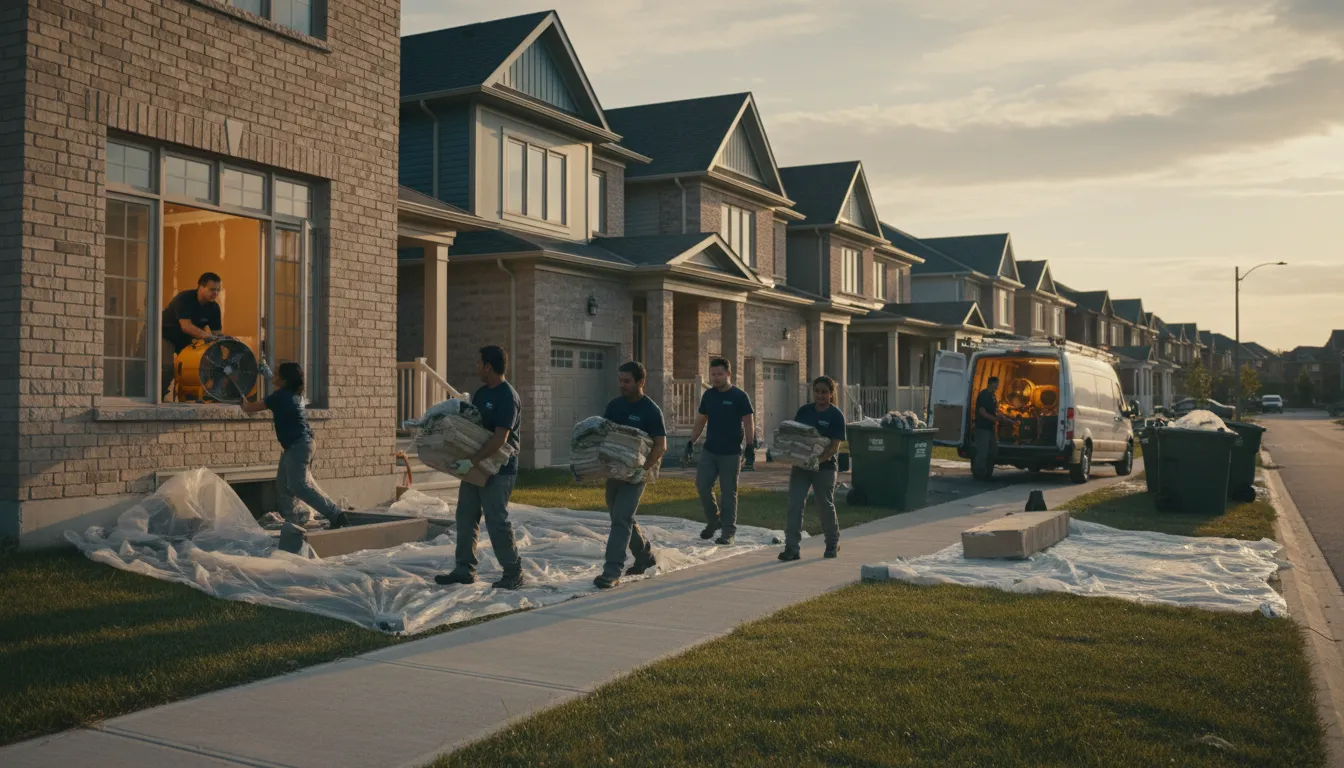
We treat sewage backup as its own category from the first assessment: containment barriers go up before cleanup starts, affected porous materials that can't be sanitized are documented and removed, and surfaces that can be treated are sanitized properly — not just wiped down and dried.
Our sewage cleanup process
A contamination job needs a contamination-appropriate process.
- 1
1. Containment first
We seal off the affected area before any cleanup starts, to prevent contamination from spreading through the home.
- 2
2. Assessment of porous vs. non-porous materials
Porous materials that absorbed sewage-contaminated water often can't be safely sanitized and need to be documented and removed.
- 3
3. Extraction and disposal
Contaminated water and unsalvageable materials are removed and disposed of according to proper protocol.
- 4
4. Sanitizing
Surfaces that can be treated are cleaned and sanitized to a standard appropriate for category 3 water.
- 5
5. Drying and verification
The space is dried and moisture-checked before we call the job complete.
Why choose us for sewage cleanup
This isn't a job to shortcut, and we don't.
Proper containment
We isolate affected areas before cleanup, preventing cross-contamination.
Correct material disposal
Porous materials that can't be safely sanitized are documented and disposed of properly.
Fast response
Sewage exposure risk increases the longer cleanup is delayed.
GTA infrastructure knowledge
We understand why backups happen more in some Toronto neighbourhoods than others.
Written scope and cost
You know what's being removed and sanitized before we start.
Insurance documentation
Photos and disposal records are organized for your claim.
Sewage cleanup questions
Is sewage backup covered by home insurance?
Coverage varies by policy — some require specific sewer backup endorsement. We can't advise on your policy specifics, but we document everything in a format your insurer can review.
Can carpet be saved after a sewage backup?
Usually not. Carpet and underpad are porous and typically can't be sanitized to a safe standard after sewage contamination, so they're generally documented and removed.
Why did my basement back up during a storm?
In parts of Toronto, combined sewer systems or aging sewer laterals can allow municipal surge to back up into a basement floor drain during heavy rain. A backwater valve, if you don't already have one, is worth discussing with a plumber.
How is sewage cleanup different from regular water damage cleanup?
Sewage is category 3 contaminated water, requiring containment, careful material disposal, and sanitizing protocols that clean-water flooding doesn't need.
Do you handle disposal of contaminated materials?
Yes, disposal of unsalvageable materials is part of the scope and is documented for your records.
Don't wait on a sewage backup
Email us the details and we'll walk you through the proper containment and cleanup steps.
Email Us for a Free EstimateWeather drives water-damage risk — email us if you find water.
Fall water-damage conditions in Toronto, ON
Fall rain around Toronto, ON tests gutters, sump pumps, and foundations; catching leaks and seepage early prevents the slow water damage and mold that surface over winter.
Proudly Serving Toronto, ON
Local, on-time service throughout Toronto and the surrounding area.