
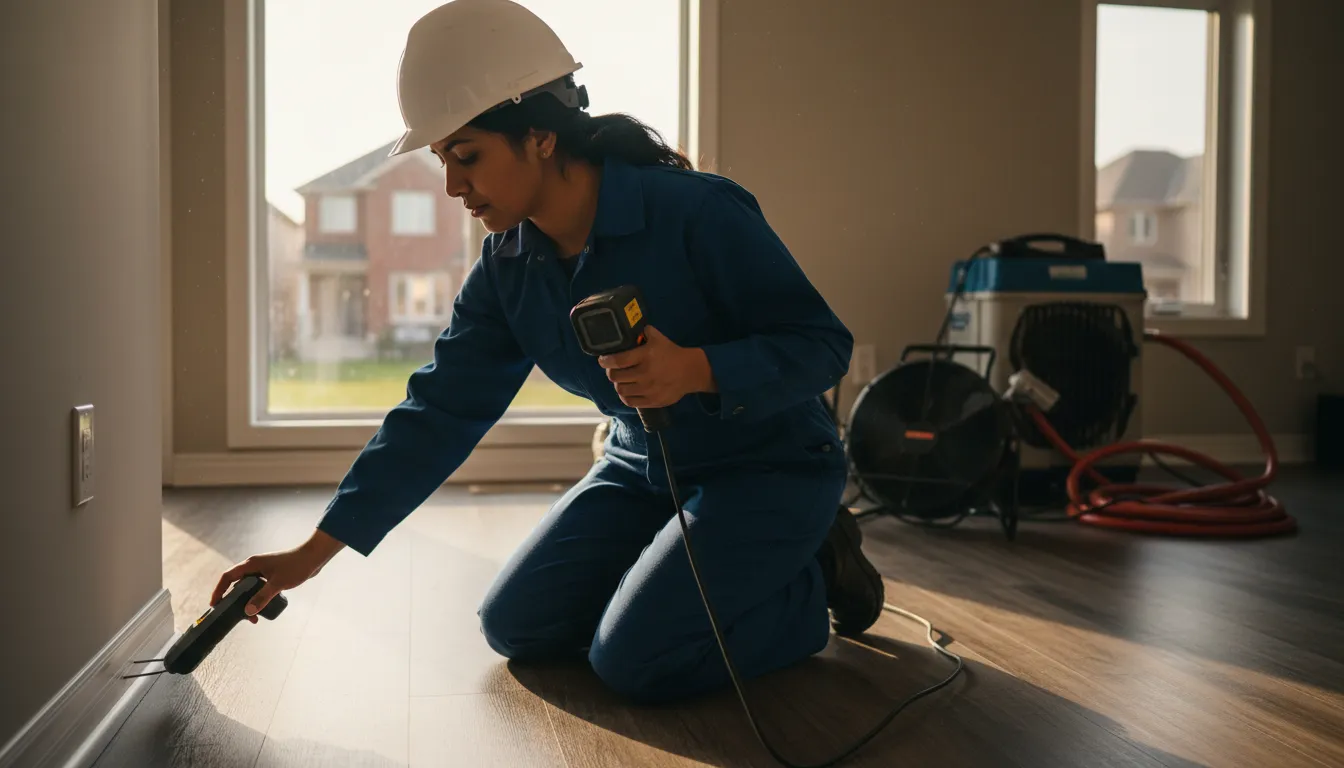
Structural drying in Toronto, measured by moisture readings, not a fixed rental period
Drying equipment that runs for a preset number of days regardless of results is how mould problems start later. We monitor readings and keep equipment running until the numbers say the structure is actually dry.
Free estimates · Same-day service available · No obligation
Why structural drying takes longer in some Toronto homes than others
The materials and construction era of a home change how long drying actually takes — which is exactly why a fixed-day rental quote doesn't fit every job.
Solid masonry basements hold moisture in the wall itself
Older Toronto homes with solid brick or block basement walls can have moisture trapped in the masonry itself, requiring longer monitored drying than a stud-and-drywall wall.
Engineered subfloor in newer builds dries unevenly
Engineered wood subfloor common in newer GTA construction can dry on the surface while staying wet underneath, which only a moisture meter — not a visual check — will catch.
Wall cavity insulation changes drying speed
Homes with batt insulation in basement walls dry more slowly than uninsulated cavities, since the insulation itself needs to release moisture before the wall reads dry.
GTA humidity swings affect dehumidifier load
Southern Ontario's humid summers mean dehumidification equipment works against ambient moisture too, not just the water damage itself, which can extend drying time in warmer months.
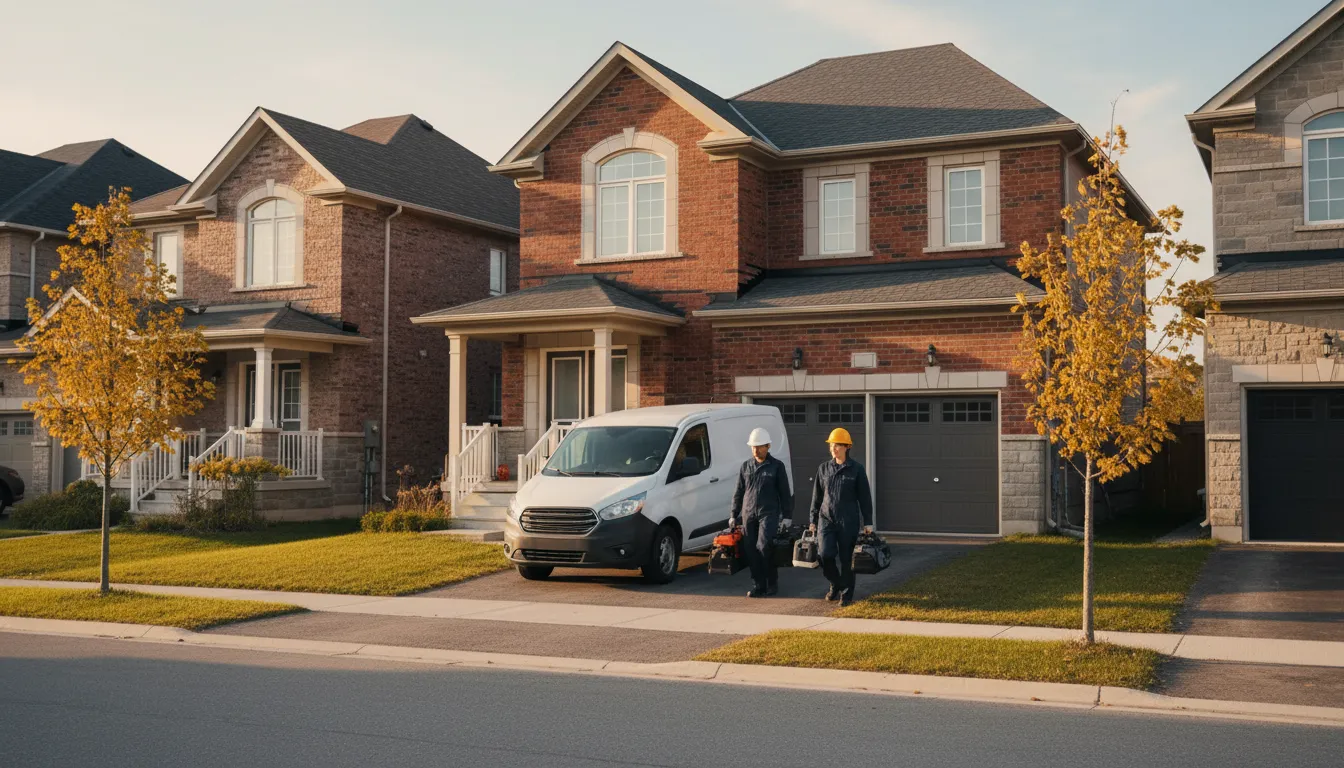
The 3-day drying package, regardless of what the readings say
A common cost-cutting move: equipment is quoted for a fixed 2 or 3-day rental because that's what the price sheet says, not because a moisture meter confirmed the structure was dry. Pull equipment too early and moisture left behind in framing or subfloor becomes a mould problem within weeks.
We dry to the numbers, not the calendar
We take moisture readings at the start and re-check every visit. Equipment stays until framing, subfloor, and wall cavities read at acceptable moisture levels — which might be faster or slower than a generic package, but it's tied to your actual structure, not a rental schedule.
Our structural drying process
Monitoring is the whole point.
- 1
1. Baseline moisture readings
We measure moisture in framing, subfloor, and drywall to establish a starting point.
- 2
2. Equipment placement
Air movers and dehumidifiers are placed based on where moisture is highest, not a generic room setup.
- 3
3. Daily or scheduled monitoring
We return to check readings and adjust equipment placement as the structure dries.
- 4
4. Progress reporting
You get updates on moisture levels so you can see the drying trend, not just take our word for it.
- 5
5. Confirmed dry, then equipment removed
Equipment comes out once readings confirm the structure has reached an acceptable moisture level.
Why choose us for structural drying
Drying is where shortcuts cause the most expensive long-term problems.
Data-driven timelines
We dry until the readings confirm it, not until a rental period ends.
Progress reporting
You see the moisture trend throughout the process, not just at the start and end.
Placement based on actual readings
Equipment goes where moisture is highest, not a generic setup.
Prevents premature equipment removal
We don't pull equipment early just to free it up for the next job.
Mould-risk awareness
Thorough drying reduces the conditions that let mould take hold.
Written moisture logs
Documentation you can keep or share with an insurer.
Structural drying questions
How long does structural drying usually take?
It depends on the materials involved and how saturated they were — anywhere from a few days to over a week for masonry or heavily insulated walls. We give you a range after initial readings, then adjust based on daily monitoring.
How do you know when a structure is fully dry?
Moisture meter readings in framing, subfloor, and drywall need to reach an acceptable range compared to unaffected reference areas in your home — not just look or feel dry to the touch.
Does structural drying prevent mould?
Thorough drying significantly reduces the moisture conditions mould needs to grow. Pulling equipment before readings confirm dryness is one of the most common causes of mould showing up later.
Do you monitor drying daily?
We check progress on a schedule appropriate to the job — often daily for the first few days — and adjust equipment placement based on what the readings show.
Is structural drying included in flood cleanup?
It's typically the phase that follows cleanup and extraction. We scope and quote it separately so you can see exactly what it involves.
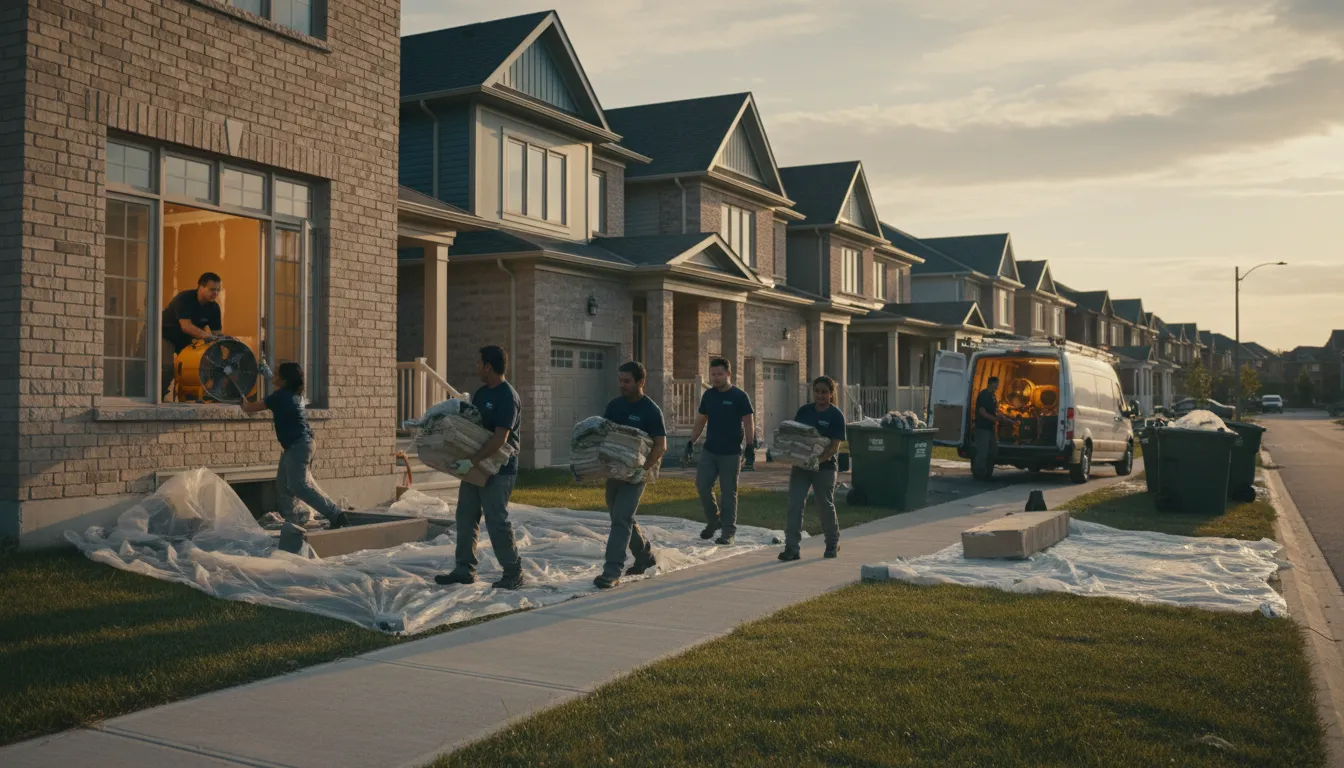
Get a drying plan measured by data, not a calendar
Email us your situation and we'll explain what a proper structural drying scope looks like.
Email Us for a Free EstimateWeather drives water-damage risk — email us if you find water.
Fall water-damage conditions in Toronto, ON
Fall rain around Toronto, ON tests gutters, sump pumps, and foundations; catching leaks and seepage early prevents the slow water damage and mold that surface over winter.
Proudly Serving Toronto, ON
Local, on-time service throughout Toronto and the surrounding area.